SENTINEL
Continuous recording, on board, with no dependence on the network.
SENTINEL is NSS's onboard CCTV system for rolling stock — train, light rail or bus — designed to operate fully autonomously on board, with continuous per-compartment recording, encrypted local storage, camera sizing based on the principles of EN 62676-4:2015 (DORI concept) and compliance with the GDPR.
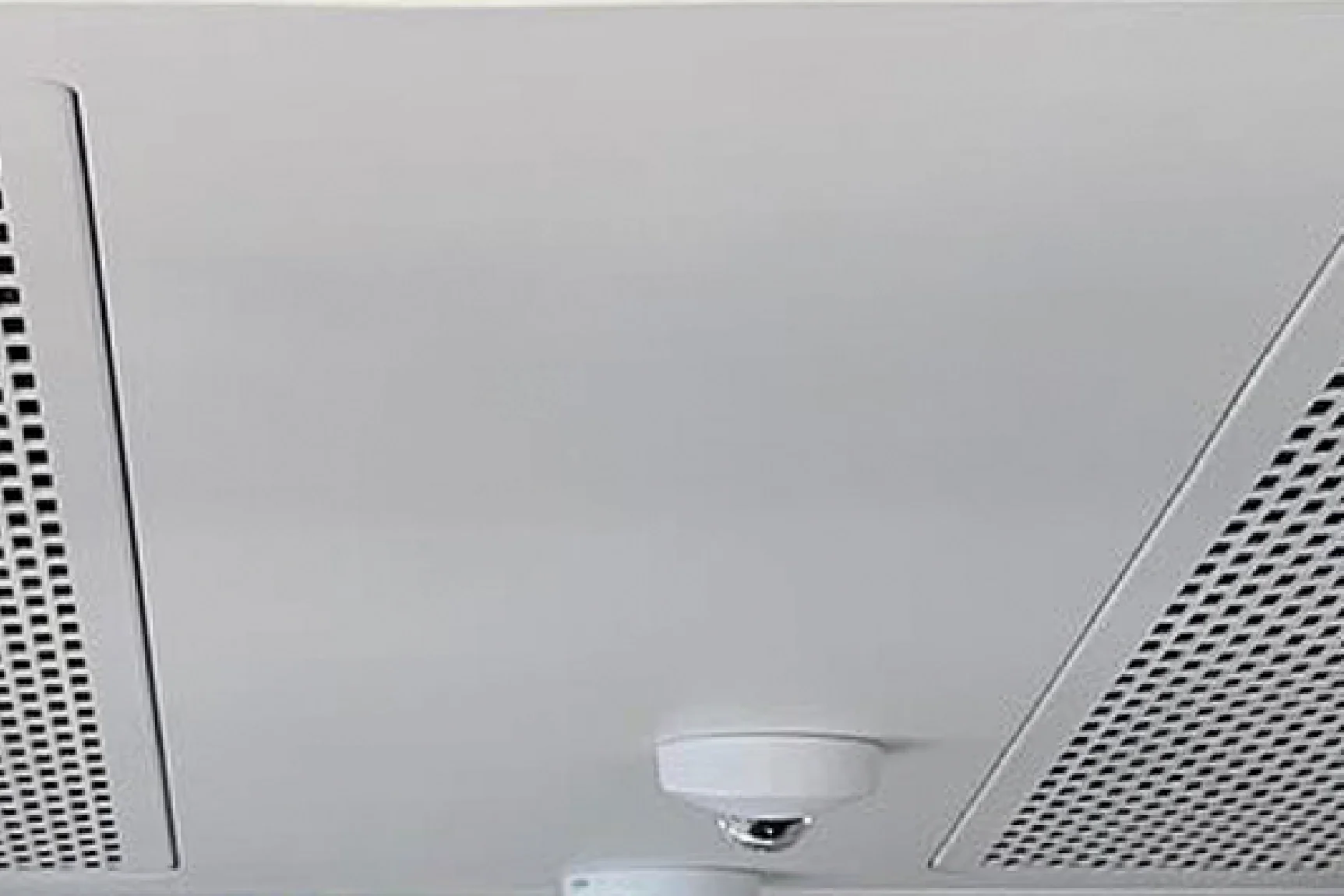
Records and retains locally, syncs whenever there's a network.
The system does not depend on a permanent network connection: it records and retains footage locally, synchronising with a central management centre whenever connectivity is available, and integrates with the driver's cab panel and with the operator's control centre.
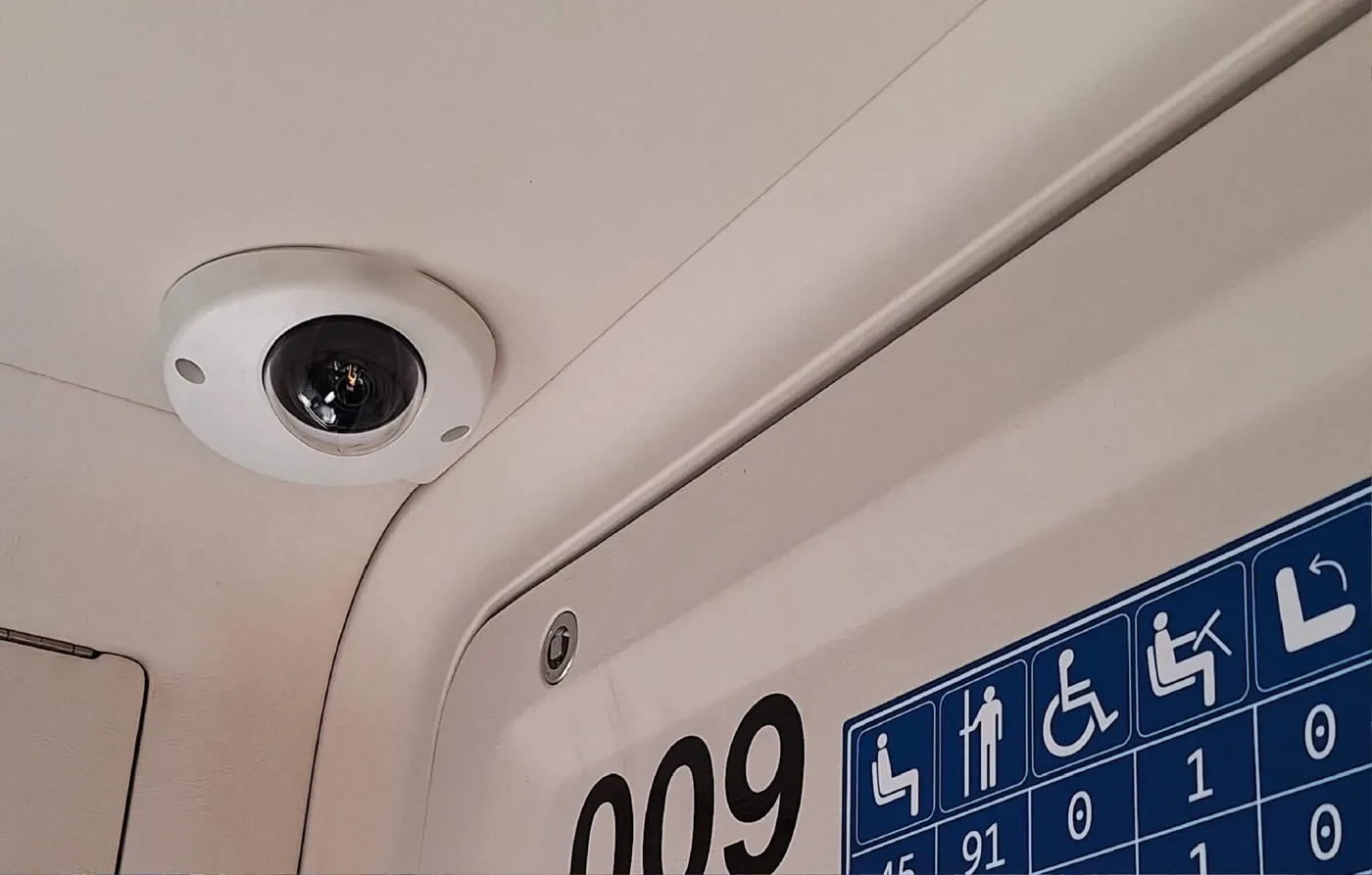
One IP camera per compartment — doors, passenger area, the zone adjacent to the driving position — designed to meet the environmental and EMC requirements of onboard electronic equipment in rolling stock (vibration, extended thermal range).
The system is not used to monitor staff professional performance — its purpose is exclusively safety-related.

CONCEPT — illustration of the function, not a real system capture. Generic, unbranded cameras; camera count is illustrative.
Architecture and autonomy
IP cameras per compartment
Ceiling domes in a metal enclosure rated IP67 / IK10 (20 J), on a single Ethernet PoE (IEEE 802.3af) link over an X-coded M12 connector — no separate power feed and no RJ45 exposed on board. Available in 2 MP (Full HD, H.264/H.265) or 5 MP fisheye, drawing at most 7.2 W per camera. Camera count and compartment split scale to the consist or vehicle — from a single bus to a multiple-unit train.
Local (edge) recording
Continuous, independent of the network, on an industrial storage unit with full-disk encryption and boot restricted to an authorised environment.
Configurable hybrid retention
Local baseline on board (typically 7 days) with automatic overwrite of the oldest footage, and optional sync for extended retention (up to 30 days) when connectivity is available.
Post-shutdown autonomy
The system remains operational for a period after the vehicle's power is cut, ensuring that recording and synchronisation are completed.
Tamper detection and alarms
Detects tampering and recording failures, and publishes the alerts over MQTT to the vehicle's other onboard systems.
Forensic search and export
Recording lookup by vehicle, camera/compartment and date/time range, with logged clip export to preserve the chain of custody.

EN 50155 — reference
Environmental reference for vibration, electromagnetic compatibility and thermal range of onboard electronic equipment in rolling stock. A laboratory test report exists for the interior IP camera hardware, held by the component manufacturer — NSS does not yet have a written declaration linking its own commercial reference to the tested model, so it is not cited as NSS-owned certification.
EN 50121-3-2 · EN 50153 · EN 61373 — reference
Electromagnetic compatibility of rolling stock apparatus, protection against electrical hazards, and shock and vibration testing. Test reports and certificates exist for the interior IP camera hardware, held by the component manufacturer — NSS does not yet have a written declaration linking its own commercial reference to the tested model, so these are not cited as NSS-owned certification.
EN 45545-2 — reference
Fire behaviour of materials in rolling stock. A complete laboratory test exists for one camera option, but it has expired; for the other option, the test held covers a cable of the equipment, not the camera as a whole. No valid certificate held to date for either option.
UN ECE R10 · EN ISO 13732-1 — reference
Electromagnetic compatibility type approval for road vehicles (e-mark) and accessible surface temperature. Type approvals and reports exist for the interior IP camera hardware, held by the component manufacturer — NSS does not yet have a written declaration linking its own commercial reference to the tested model, so these are not cited as NSS-owned certification.
EN 62368-1 — reference
Electrical safety of audio/video and information technology equipment — conformity declared by the manufacturer for the interior IP cameras; no test report held by NSS.
UN ECE R118 (reference)
Burning behaviour of interior materials in road vehicles — the test held covers the interior IP cameras' cable, not the camera as a whole; type approval of the camera body under evaluation.
IEC/EN 62676-4:2015
Standard for video surveillance systems for security applications — sizing of each camera's resolution using the DORI (Detect, Observe, Recognise, Identify) concept.
GDPR + Law No. 58/2019
Regulation (EU) 2016/679 and national data protection law — lawfulness, defined recording retention periods and data subject rights.
Law No. 34/2013 + Ordinance No. 273/2013
Private security legal framework — logging of interventions and mandatory signage (ISO 3864-1 symbol), inside and outside the vehicle.
NP EN 13269:2007
Six-monthly preventive and corrective maintenance plan, with a system logbook and a technical report per intervention.